




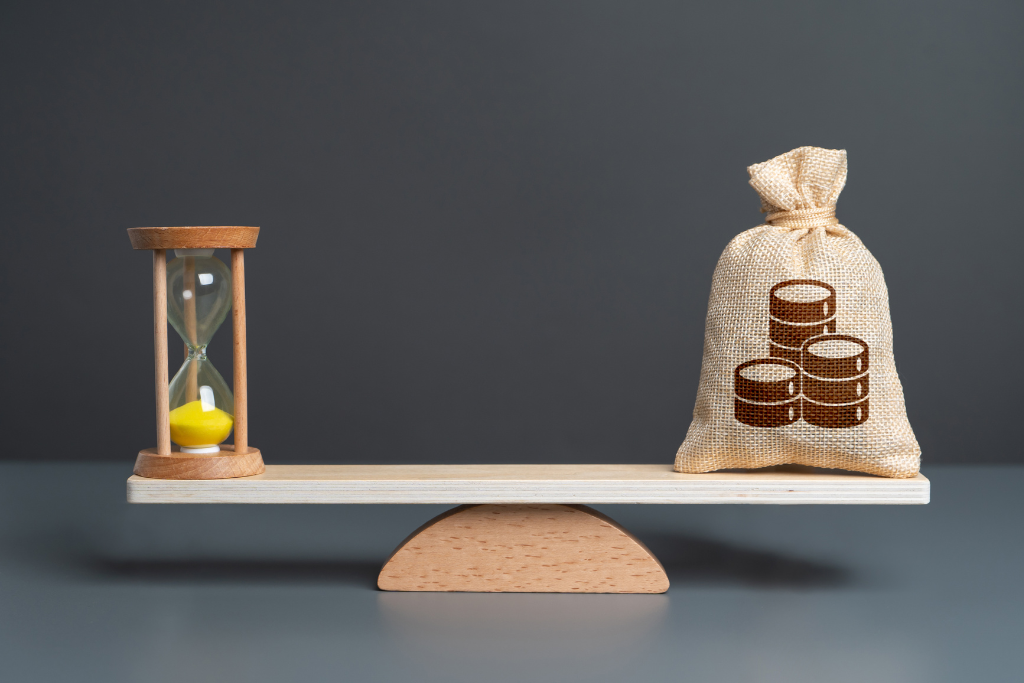
The time value of money is a concept that explains why a certain amount of money owned today is generally more valuable than the same amount received in the future. This is because money available today can be saved, invested, or used to generate potential returns according to the characteristics of the financial product.
This concept is widely used in finance, investment, and personal financial planning. By understanding the time value of money, you can make more measured financial decisions when saving, investing, or planning for long-term needs.
What Is the Time Value of Money?
In finance, the time value of money (TVM) is the concept that the value of money is affected by time.
Simply put, Rp1 million owned today does not necessarily have the same economic value as Rp1 million received five years from now. During that period, the money may grow through interest or investment returns, while its purchasing power may also change due to inflation.
Therefore, time is an important factor in financial management.
Why Is the Time Value of Money Important?
Understanding this concept can help you make various financial decisions, such as:
- Setting savings goals
- Comparing investment options
- Calculating future funding needs
- Evaluating the benefits of receiving money now or later
- Creating long-term financial plans
The earlier you start setting money aside, the greater the opportunity for your funds to grow according to the characteristics of the financial product you choose.
Time Value of Money Concepts
In time value of money materials, there are two main concepts that are most commonly studied.
1. Present Value (PV)
Present Value (PV) refers to the current value of an amount of money that will be received in the future.
This concept is used when you want to determine the value of future money based on its value today.
For example:
- Calculating investment value
- Evaluating business projects
- Calculating retirement funding needs
2. Future Value (FV)
Future Value (FV) refers to the value of money in the future after earning interest or investment returns over a certain period.
For example, someone saves Rp10 million in a product that provides interest according to its terms and conditions. Over several years, the value of the funds may increase as interest is earned.
Types of Time Value of Money
In general, the types of time value of money include several concepts:
1. Present Value (PV)
Calculating the current value of an amount of money to be received in the future.
2. Future Value (FV)
Calculating the future value of money based on its current value.
3. Annuity
A series of fixed payments or receipts made periodically over a certain period.
4. Compound Interest
An interest calculation method that takes previously earned interest into account, allowing funds to potentially grow faster than with simple interest.
Example of the Time Value of Money
Suppose you have two options:
- Receive Rp10 million today
- Receive Rp10 million five years from now
Most people would choose to receive the money today because the funds can be used, saved, or invested immediately.
This is a simple example of how the time value of money concept can be applied.
Time Value of Money: Present and Future
The difference between the time value of money today and in the future can be influenced by several factors, including:
- Interest rates
- Inflation
- Length of time the funds are held
- Investment risk
The longer the period, the greater the potential influence of these factors on the value of money.
Time Value of Money Table
In economics and finance studies, a time value of money table is often used to simplify Present Value and Future Value calculations.
As a simple illustration:
|
|
|
|
|
|
|
|
|
|
|
|
|
|
|
|
*The actual value depends on the interest rate, calculation method, fees (if applicable), and the product’s terms and conditions.
Why Is the Time Value of Money Widely Studied?
It is not surprising that this topic frequently appears in time value of money papers and management and accounting courses.
The concept serves as a foundation for various financial decisions, from investment analysis and asset valuation to financial planning for businesses and individuals.
By understanding this concept, you can more easily estimate future funding needs.
How Can You Apply the Time Value of Money?
Some simple ways to apply it in everyday life include:
- Start saving as early as possible
- Set clear financial goals
- Set aside money regularly
- Choose financial products according to your needs and risk profile
- Review your savings or investment progress regularly
Consistency in setting money aside is often an important factor in reaching financial goals.
Build Your Saving Habit Starting Today
Understanding the time value of money can serve as a reminder that starting earlier gives your funds more time to grow according to the characteristics of the financial product you choose.
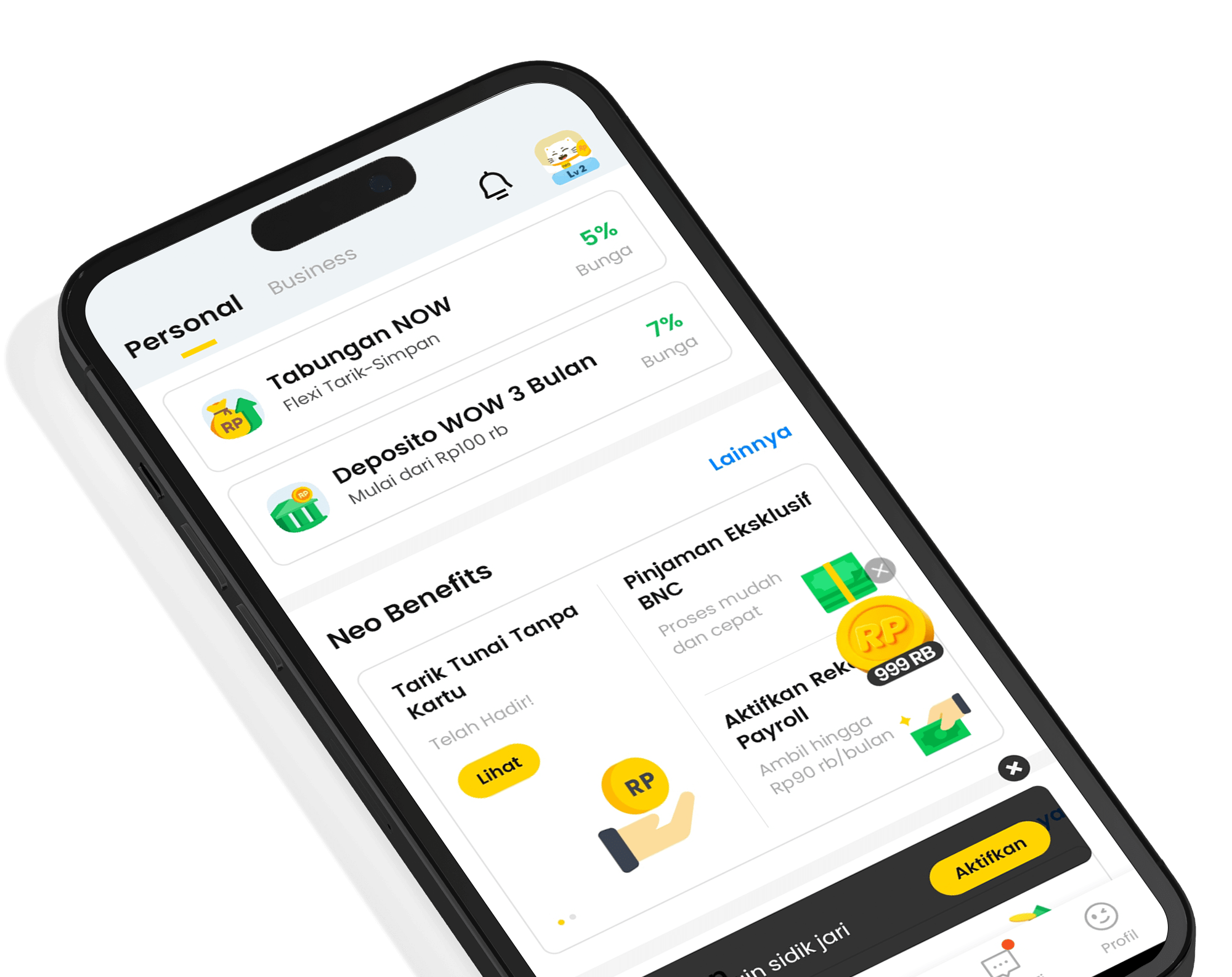
If your goal is to build a saving habit, Tabungan NOW on the neobank app from Bank Neo Commerce can be one option to consider. Tabungan NOW offers competitive interest paid daily. You can regularly monitor your savings directly through the neobank app.
***
Features, fees, and product terms and conditions may change in accordance with the bank’s policies.
*Please note the deposit interest rate set by the Deposit Insurance Corporation (LPS). Savings with an interest rate exceeding the LPS guarantee rate are not covered by LPS. The LPS guarantee interest rate through September 30, 2026, is 3.75% per annum.
If you would like to start using Tabungan NOW, download the neobank app through the Play Store or App Store. For more information, visit the Tabungan NOW page on the official Bank Neo Commerce website.
PT Bank Neo Commerce Tbk is licensed and supervised by the Financial Services Authority (OJK) and Bank Indonesia (BI), and is a participant in the Deposit Insurance Corporation (LPS) guarantee program.




What are you waiting for?
Let's try neobank now!
.png)
.png)

PT Bank Neo Commerce Tbk is licensed and supervised by the Financial Services Authority (OJK) & Bank Indonesia (BI) and is a member of Indonesia Deposit Insurance Corporation (LPS).
The maximum deposit amount insured by LPS per customer per bank is Rp2 billion. To find out the LPS Guaranteed Interest Rate, please access here.
Copyright © 2023, All Rights Reserved, PT. Bank Neo Commerce Tbk


PT Bank Neo Commerce Tbk is licensed and supervised by the Financial Services Authority (OJK) & Bank Indonesia (BI) and is a member of Indonesia Deposit Insurance Corporation (LPS).
The maximum deposit amount insured by LPS per customer per bank is Rp2 billion. To find out the LPS Guaranteed Interest Rate, please access here.


Copyright © 2023, All Rights Reserved, PT. Bank Neo Commerce Tbk